I love living near a pond that, in spring, is home to geese and their new born families. These guys were born just a week or so ago.


 |
 | |||||
| This house was hidden in trees about 100 yards from the barn, above. Two great-horned owls were not pleased with my visit. |
 |
| The inside of the small house above. The entire house measures about 12'x12'. |
 |
| A baby buggy left in the house. |
 |
| A view of the main settlement from the road. |
 |
| The settlement was entirely enclosed by a wooden fence with two entry points. |
 |
| Doukhobor homes were often built with lumber, and used mud to seal the cracks between the wood. |
 |
 |
| The settlement featured many small buildings like these. Most appeared to be either small dwellings or storage sheds. |
 |
| Tools inside a wooden shed. |
 |
| The Doukhobors believed in human equality and were essentially communist in the way they lived. However, most settlements featured one larger home, like this one. |
 |
| The view of the big house from the front. |
 | ||
| The mystery of the mint green paint continued at the Doukhobor settlement. This color was ubiquitous in houses built around the same time in Saskatchewan. |
 |
| A steam house, used for bathing. Every Doukhobor settlement was said to have had one. |
 |
| Seating inside the steam house. |
 |
| The oven in the steam house. |
 |
| The third part of the settlement. This barn was entirely empty save for a raccoon skeleton. |
 |
| A baby's crib inside a building on the third settlement. |
 |
| A grain storage shed at the edge of the third settlement. |
 |
| A house on the third settlement. Appears to have been occupied as late as the 1970's. |
 |
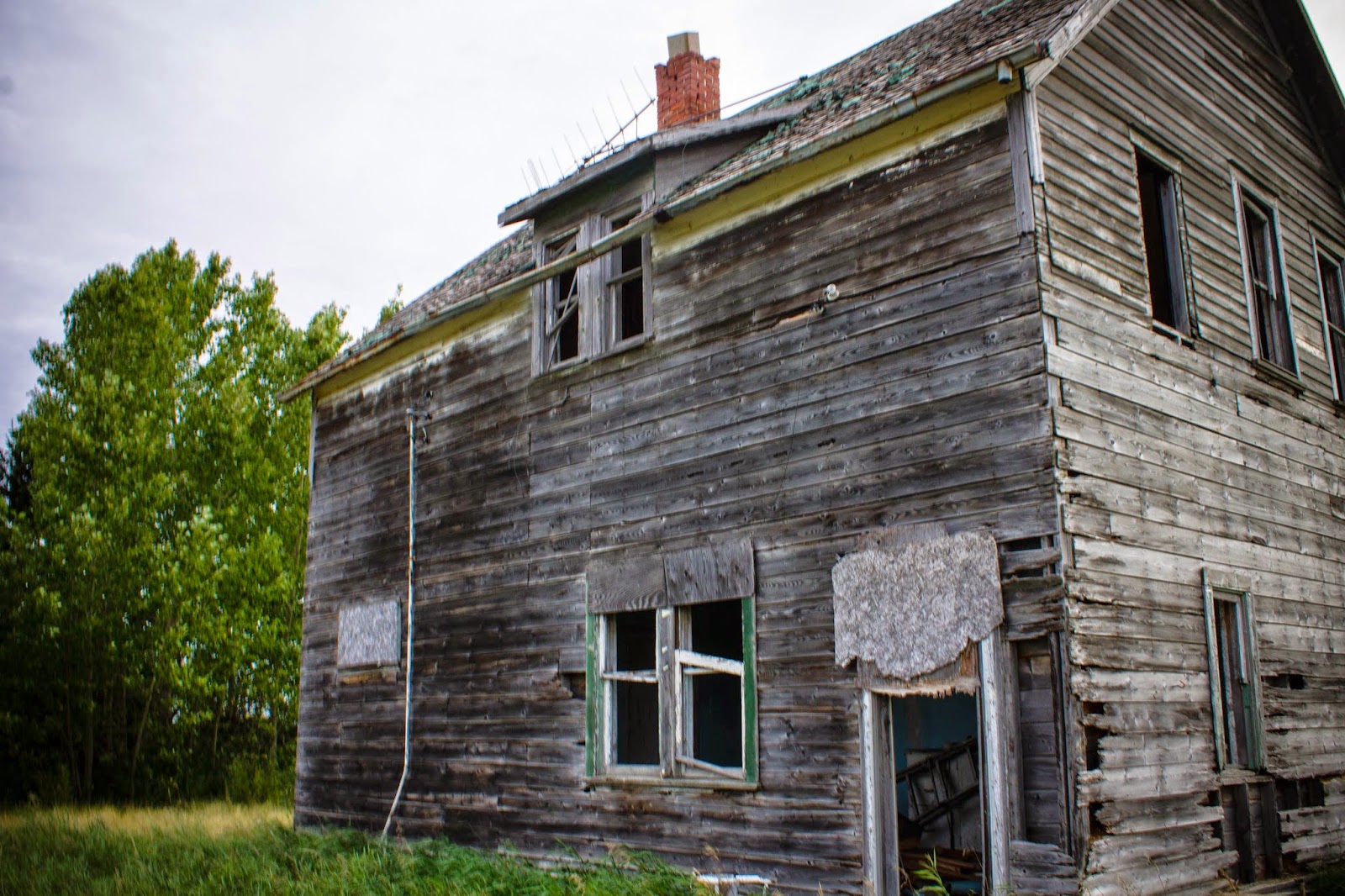
| The Beckett House |

 |
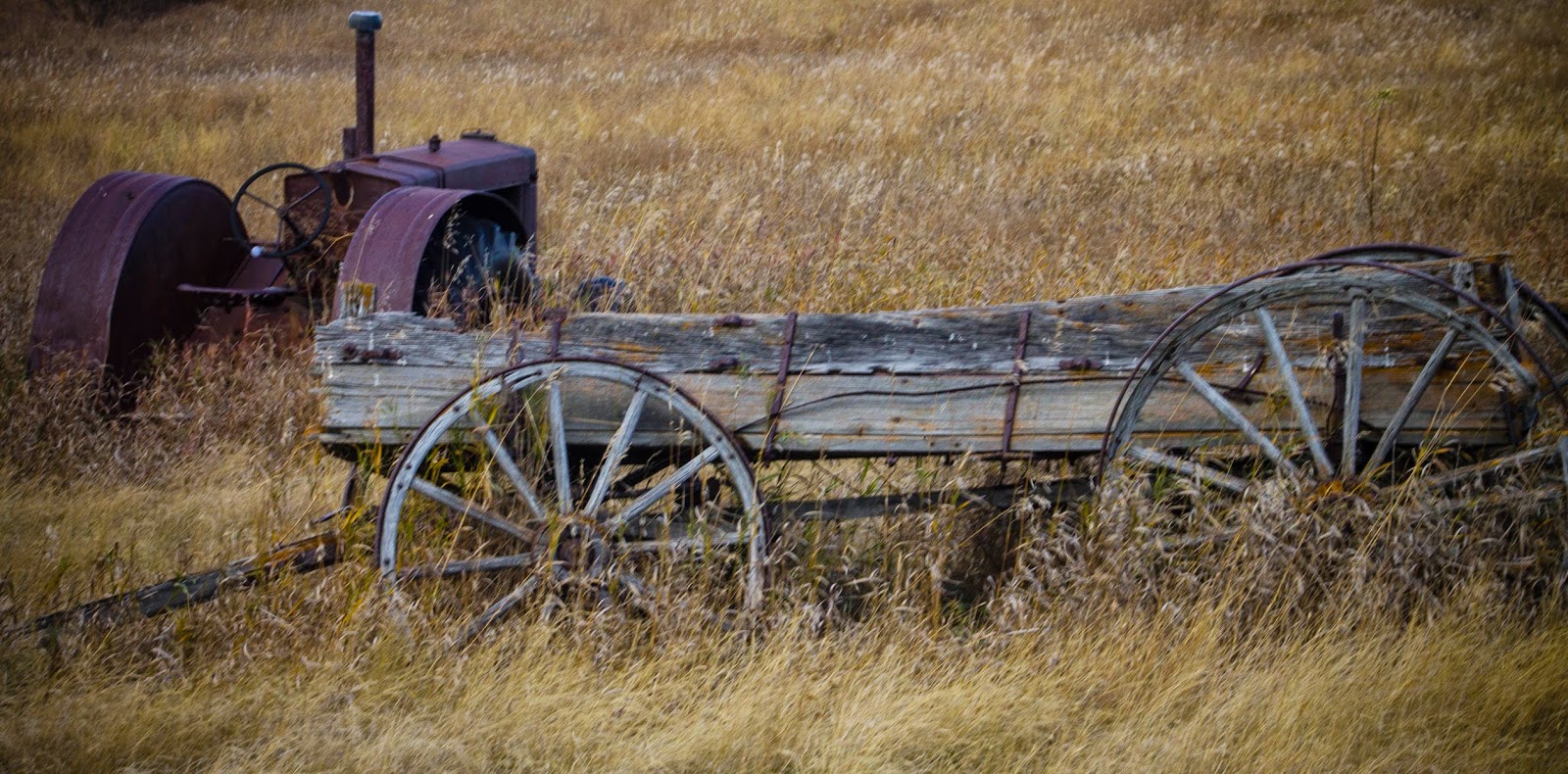
| Other buildings on the homestead |

 |
| View from the homestead. In the distance is the Kinley, Saskatchewan grain elevator. |
 |
| Inside the house. |


 |
| The living room. Notice the white chair - my family owns identical ones. |
 |
| Ladder to the attic |
 |
| Upstairs |
 |
| View out the back door. |


 |
| One of over 65,000 monuments in the main cemetery. Often, these monuments do not mark the place of burial of the individuals listed but serve as family memorial. |

 |
| Gilded Angel at the Entree Remembrance |
 |
| In 1989, many graves were moved from other city cemeteries to the Notre-Dame Des Neiges Cemetery. Those that were not immediately claimed were given makeshift grave markers like this one. Family members were given until 2015 to claim a relative's gravesite and replace the temporary markers with tombstones. Today, the field resembles a Potter's Field, with homemade markers, and numerous ones identical to the one above. |
 |
| Rows upon rows of military burials. |
 |
| On the family vault of the John Molson family. The vault is immense, built into the side of a large hill. |
 |
| The front door to the Molson family vault. |
 |
| Headstone of Ann Molson, wife of John Molson |

 |
| This headstone does not mark a burial site, but serves as a memorial to three young men who drowned in the St. Lawrence River in 1866. |

 |
| Icy hand of Jesus |
 |
| Many headstones before the 20th century list the cause of death of one or more of the individuals listed. Found in the cemetery are headstones listing as cause of death Scarlett fever, tuberculosis, cholera, fires, drownings, and many more. |
 |
| Charles Melville Hays was a passenger on the Titanic when it sank in 1912. His official date of death is given as April 15, 1912 |

 |
| This grandiose vault was built to commemorate the life of Salvatore Gervasi, a member of the infamous Gervasi mob family. He was murdered and stuffed in the trunk of his Porsche (which was then parked in front of his parents' house in Montreal) . |
 |
| Inside Salvatore Gervasi's vault |
 |
| A line of family vaults along the main road of the cemetery. |


 |
| This "Garden of Angels" contains tombstones of young children, including infants. |
 |
| In the Garden of Angels |

 |
| Built into the side of the granite Mont Royal, Vito Rizzuto's family vault is a testament to the mafia family's power and wealth in Montreal. |
 |
| Ironically, Jesus guards the vault of Vito Rizzuto |
